Expert Tips for a Stress-Free Home Clear Out (Parents Edition)
This is a collaborative post
Saturday morning. You step into the hallway and trip over Lego, shoes and yesterday’s post. The kids can’t find their homework folder, your partner is digging through the cupboard for the lunchbox and you’re already running late. Sound familiar?
Clutter drains time, patience and space. And this is more common than you’d think. In a recent study over 90% of people said that they have clutter in their home, 47.2% admitted that clutter in their home makes them feel stressed, and 22.2% said it annoys/upsets them. That means much of what clogs our homes still lingers in cupboards, lofts and garages waiting for “one day”. Clearing out doesn’t just make space – it can help families across the UK.
As tidying extraordinaire, Stacey Solomon from Sort Your Life Out explains in an interview, “decluttering your home, you can really make a positive impact on all areas of your life – including saving your hard-earned cash.”
In this guide, we will provide some expert-backed tips that will help you plan, involve the kids and keep your home under control long after the clear out is done. That way us parents can enjoy calmer mornings and a less stressful home life.
Step 1. Start small and set the goal
The biggest mistake is trying to “do the whole house.” Decluttering works best when it’s broken into chunks. Choose one or two rooms for the weekend. Bedrooms on Saturday, kitchen and bathroom on Sunday. If the loft or garage needs attention, save it for later.
Write down three outcomes you want: clear floors, labelled bags, safe walkways. Take a quick “before” photo and it will make the “after” feel worth celebrating.
Step 2. Get the whole family involved
Clear outs are smoother when everyone helps. And kids resist less when they feel part of the process.
- Toddlers and young children: can carry soft toys to a box or choose a few favourites.
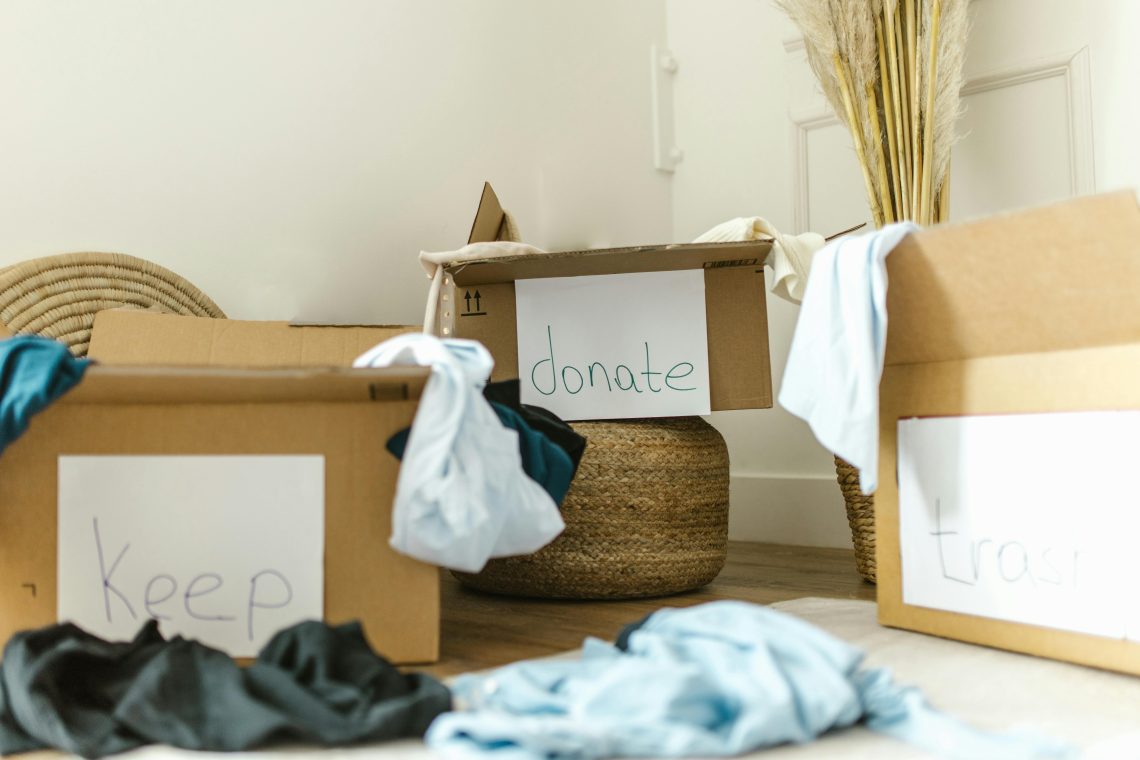
- School-aged kids: can label bags or sort books into “keep” and “donate.”
- Teens: can help with light lifting, moving recycling or organising wardrobes.
A lot of children won’t necessarily jump at the opportunity to get stuck into organisation, but it’s important to get them on board in some capacity. “The number one most important thing is systems and number two is getting the whole family on board,” explains professional home organiser Gemma Abraham in an interview with Mirror.
Make it fun for them. Use a 20-minute timer for “declutter sprints,” then give everyone a short break. Play upbeat music, and let kids earn small rewards for finishing their tasks. For balance, let each child pick one “special item” they can always keep, even if it’s tatty.
Step 3. Try the five-bin method
Overthinking decisions is what slows families down. The five-bin method solves this:
- Keep: what you use and love.
- Donate: items in good condition someone else could use.
- Recycle: anything that can go into household or special collections.
- Sell: valuable but no longer needed items.
- Waste: broken or unusable items.
Clear labelling means no confusion, and putting the “waste” bag near the door keeps things flowing.
A good rule is: if it’s broken or hasn’t been used in a year, it goes.
Step 4. Tackle rooms one by one
Decluttering a home as a parent means targeting spaces that cause the most stress.
- Bedrooms: Limit toys per shelf or box, donate outgrown clothes, and rotate what’s left. This reduces morning battles and bedtime mess.
- Kitchen: Clear surfaces first. Remove duplicate or broken gadgets. Keep lunch prep items in one tray so morning runs are smoother.
- Bathroom: Bin expired products. Give each person a labelled caddy for their daily essentials.
- Paperwork: Use three piles – Action, Archive and Shred. Store passports and insurance documents together in one safe folder. Separate things by categories, documents, bills, banking in separate folders.
- Loft or garage: Create walkways, label boxes on two sides, and photograph sentimental items before letting them go. Scan old photos and create some much needed space.
Afterwards, focus on creating calm not perfection.
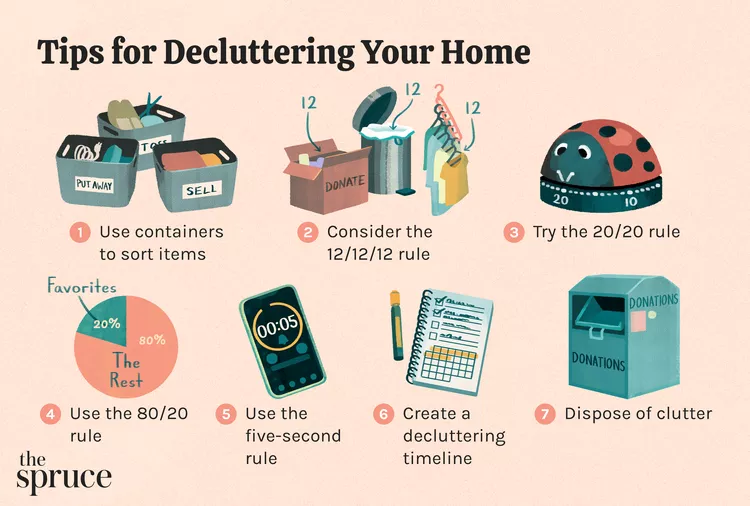
Source: https://www.thespruce.com/how-to-declutter-your-home-2648002
Step 5. Donate, recycle and dispose the easy way
Giving items a second life helps both families and the planet. The charity reuse sector has prevented 86,127 tonnes of products from being wasted which saved 92,566 tonnes of CO2 emissions. Bagging up clothes and toys for local shops and booking free furniture collections where possible, you too can contribute to this number.
Keep recycling simple. Create a “boot box” in your car for batteries, small appliances, and soft plastics that need drop-off points. Your council’s website will show what can and can’t go in household bins.
And when the rubbish piles up faster than you expect, a skip takes the stress away. “The amount of rubbish that piles up during a clear out always catches families off guard. Having a skip ready outside means you deal with it in one go and avoid countless trips to the tip,” says the team at ProSkips. FFrom Canary Wharf to Croydon, families use ProSkips for reliable waste solutions, with popular services including Wimbledon skip hire and Hackney.
Step 6. Keep the calm going
A one-off clear out won’t last unless you build simple habits.
- Block 15 minutes every Sunday for a family reset.
- Create a landing zone by the front door for items that need to leave – donations, recycling, or borrowed school kit.
- Rotate toys or wardrobes monthly to keep clutter down.
- Make a to-do of one drawer per person every week. It’s quick, achievable and effective.
Daily decluttering helps too. A simple chore chart will help keep things organised and everyone responsible for their duties.
Printable Chore Chart for Families
To keep the new system alive, use this simple chart. You can print and stick it on the fridge or somewhere easily visible..
| Chores | Mum | Dad | Kids |
| Daily | Sort post, prepare lunch and dinner prep school bags, | Load/unload dishwasher, prepare breakfast and snacks and take trash bins out | Put toys in basket and pack school bag |
| Weekly | Wash bedding and create a meal plan | Hoover downstairs and tidy-up the garden | Help fold laundry and water plants |
| Monthly | Rotate wardrobe and update paperwork | Garage tidy, check and manage the recycling and donation bins | Choose toys/ books to donate |
| Seasonal | Declutter one room | Clear loft/ garage | Sort clothes that don’t fit and help bag donations |
Final word
A stress-free clear out isn’t about perfection. It’s about calmer mornings, safer rooms and having space to enjoy family life. Start small, involve the kids, donate what you can, recycle the rest and use a skip when you need to. Most importantly, keep up the momentum with weekly resets and small family chores.
With the right system in place, your home becomes less about “where’s my homework” and more about “let’s sit down together.”
You May Also Like
What do you Mean, Your Child’s NOT in Pampers?!

5 Self-Care Ideas For Mums