Low-Set Engagement Rings: Comfort and Wedding-Band Fit
This is a collaborative post
Would a low-set engagement ring suit everyday family life?
A ring can look lovely in a close-up photograph. It is harder to picture it while fastening a child’s coat, reaching into a handbag or pulling on your favourite jumper. If you want something that feels less in the way, a low-set engagement ring is worth trying.
A lower setting holds the centre stone closer to your finger. That can make the ring less prone to catching, but height is only part of the picture. The edges around the stone, the width across your hand and the space for a wedding band all deserve a look before you decide.
Start with the side view
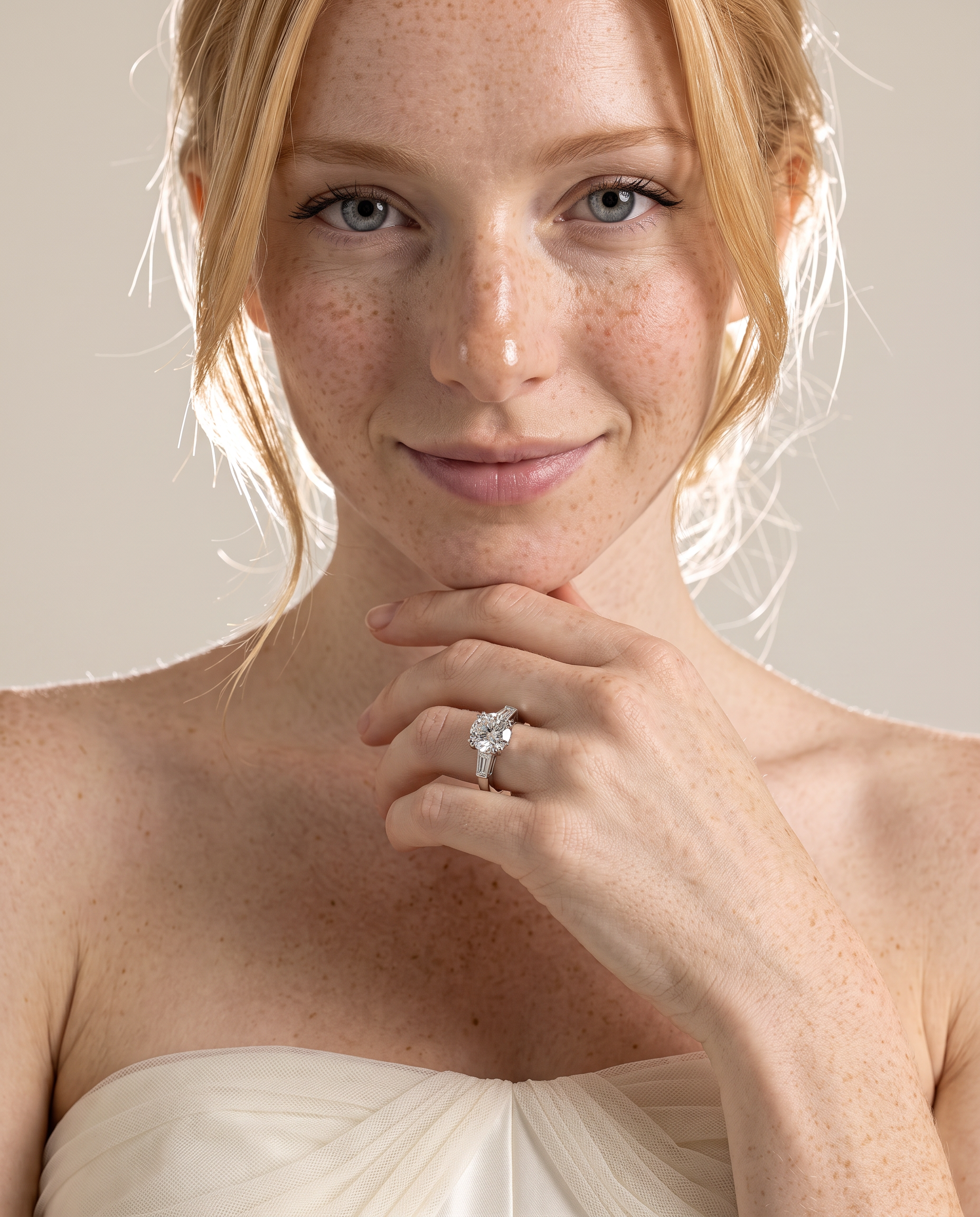
Look at a ring straight from the side and trace the height from the band’s inner surface directly beneath the centre setting to the top of the stone. This shows how far it will project above your finger, which an overhead photograph cannot tell you.
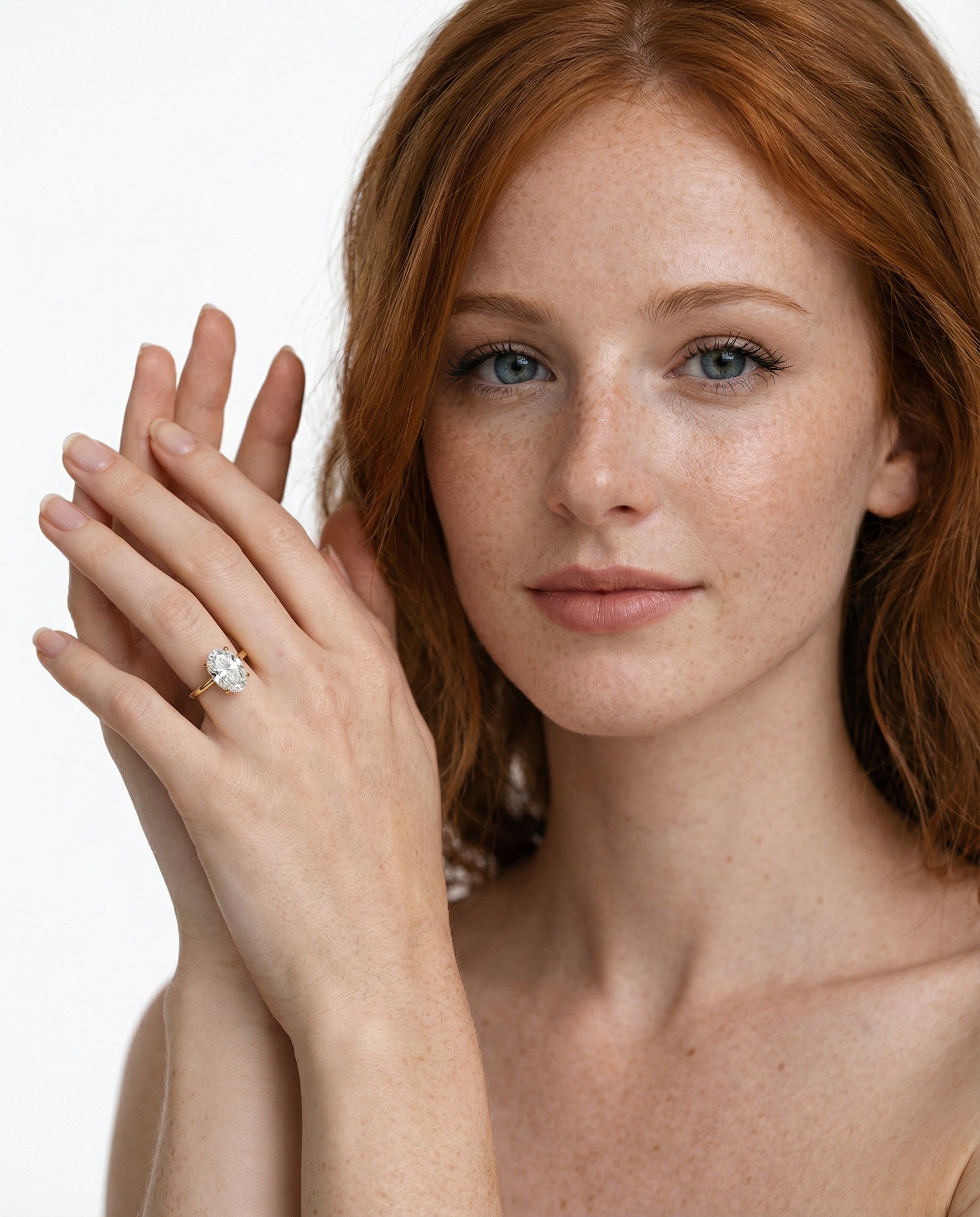
If an oval engagement ring is on your shortlist, Lily Arkwright’s lab-grown collection includes claw-set solitaires and bezel designs such as Margot. The claws leave more of the outline exposed; a bezel frames the stone with metal. Compare their side profiles as well as their appearance from above, rather than assuming that a bezel must sit lower.
Ask for the height of the version you would receive, including your chosen stone size. If two retailers provide measurements, check where each measurement starts and ends. A figure measured from the top of the band is not directly comparable with one measured from its inner surface.
Low-set does not mean small or completely smooth
Height describes how far the ring projects outwards. It does not tell you how much of your finger the stone covers. An elongated oval can sit close to the finger while still having a noticeable presence along it. You do not have to choose a tiny-looking ring to explore a lower profile.
Equally, a low setting can still have projecting details. In its guide to engagement ring settings, GIA explains that raised claw edges can catch on fabric, while a bezel offers a smoother edge around the stone. Look at the small details as well as the overall height.
During a fitting, hold your phone or reach gently into the pocket of the coat you wear on the school run. Bend your fingers and let your hand rest naturally. Notice whether the ring presses against neighbouring fingers or feels in the way. Explain those particular sensations to the jeweller. “It presses here” is more useful than deciding that every low-set ring will feel the same.
Try the wedding band before committing
A low centre setting can occupy the space where a straight wedding band would otherwise sit. The two rings may leave a gap because the band meets the metal supporting the stone before it reaches the engagement-ring band.
That is not automatically a problem. You may like the gap, prefer a curved wedding band that follows the setting, or plan to wear the rings on separate hands. What matters is finding out before you have bought both.
If you want a straight band to sit closely alongside the engagement ring, make that part of the brief from the start. A slightly raised design may provide the clearance you need, but height alone cannot confirm the fit. Try the actual combination and ask the jeweller to check where the rings touch, including whether one could wear against the other’s setting.
Try a shaped wedding band on its own, too. If you expect to wear it without the engagement ring on some days, you should like that view just as much.
Keep the ring-off routine
A lower profile makes a difference to how a ring wears, not to whether it needs care. GIA recommends removing engagement rings before activities such as gardening and exercise. Take it off for cleaning and washing up as well; choosing a smoother setting does not make those jobs harmless to jewellery.
Give the ring its own soft-lined compartment in a closed box, away from the sink and out of children’s reach. As with giving everyday belongings a home, a familiar storage place saves another search when you are already trying to get everyone out of the door.
Choose the ring, not just the label
You might discover that a slightly higher ring works better with the wedding band you love, or that a lower profile feels right immediately. Let the way the complete pair looks and feels guide you. The aim is a ring you enjoy wearing through an ordinary day.
You May Also Like

How to Build a Skincare and Self-Care Routine That Works for You
Lost my Name Personalised Storybook for Kids